Authorized AMSOIL Dealer
Joseph Feghali
Miami, FL

1981 Ford Trucks Courier 2.0L Oil Type and Capacity

Free Vehicle Maintenance App

For cars, trucks, ATVs & more

Track oil changes, save service records, and get maintenance reminders.

Keep your maintenance history handy for your next service.

Your Vehicle's Information

Year:

1981

Make:

Ford Trucks

Model:

COURIER

Engine Size:

2.0L

Engine #:

[1]

Recommended Synthetic Oil for a 1981 Ford Trucks Courier 2.0L

Product Name Product Description Capacities Product
Premium Protection 10W-40 Synthetic Motor Oil Protect your vehicle with the world's best synthetic oil for your Courier! With filter 5.1 quarts When refilling, remove dipstick to provide adequate venting and allow oil to flow into crankcase. After refill, check oil level. Top off to proper level as needed. AMOQT-EA
Premium Protection 10W-40 Synthetic Motor Oil AMOQT-EA
Add To Cart
Add To Cart
XL 10W-40 Synthetic Motor Oil Protect your Courier now with Amsoil products! Made in USA! With filter 5.1 quarts When refilling, remove dipstick to provide adequate venting and allow oil to flow into crankcase. After refill, check oil level. Top off to proper level as needed. XLOQT-EA
XL 10W-40 Synthetic Motor Oil XLOQT-EA
Add To Cart
Add To Cart

Recommended transmission fluids for my 1981 Courier

Product Name Note Capacities Product Description Product
Super Shift® Racing Transmission Fluid SAE 10W Automatic Transmission Fluid
3 speed 3N71B Total Fill 6.6 quarts 4 quarts Initial Fill Super Shift Racing Transmission Fluid resists extreme heat and slippage! Rock n' roll on the track with this awesome transmission fluid! Get this oil for your 1981 Ford Trucks Courier now! ARTQT-EA
Super Shift® Racing Transmission Fluid SAE 10W ARTQT-EA
Add To Cart
Add To Cart

Differential for my Ford Trucks Courier

Product Name Note Capacities Product Description Product
SEVERE GEAR® 80W-90 Dana 60 Rear 5.1 pints
Dana 70 Rear 7 pints
This lube is made to exceed the requirements of equipment and all vehicles that require SAE 80W-90 viscosity. It is made with synthetic base oils and top additives without adding any wax. Amsoil Severe Gear is solid against thermal breakdown. Will give you awesome protection for bearings and gears and tough against heat which will help extend the life of your equipment and avoid costly repairs. Made in the U.S.A. AGLPK-EA
SEVERE GEAR® 80W-90 AGLPK-EA
Add To Cart
Add To Cart
SEVERE GEAR® 75W-90 Dana 60 Rear 5.1 pints
Dana 70 Rear 7 pints
This special formula is made for harsh operating conditions that pick-up trucks endure. Also top-notch protection for SUVs, heavy equipment, and other heavy-duty vehicles. Made in the USA. SVGPK-EA
SEVERE GEAR® 75W-90 SVGPK-EA
Add To Cart
Add To Cart
SEVERE GEAR® 75W-110 Dana 60 Rear 5.1 pints
Dana 70 Rear 7 pints
This is a fantastic lubricant for towing trailers, heavy duty hauling, off road driving/4x4, commercial applications, and for race enthusiasts. This severe gear lube will protect bearings, gears from friction and exceeds performance of any regular gear oil out there! Keep your truck or vehicle out of the shop and avoid costly repairs with this made in the USA lube. SVTPK-EA
SEVERE GEAR® 75W-110 SVTPK-EA
Add To Cart
Add To Cart

Recommended coolants for my Ford Trucks Courier

Product Name Product Description Capacities Product
Passenger Car & Light Truck Antifreeze & Coolant maximum protection for your 1981 Ford Trucks Courier under extreme temperatures and operating conditions! Lasts up to 150,000 miles or five years! (whichever comes first) ANTPC1G-EA
Passenger Car & Light Truck Antifreeze & Coolant ANTPC1G-EA
Add To Cart
Add To Cart
Low Toxicity Antifreeze and Engine Coolant Lasts in your 1981 Ford Trucks Courier for up to 150,000 miles or five years! (whichever comes first). Biodegradable! ANT1G-EA
Low Toxicity Antifreeze and Engine Coolant ANT1G-EA
Add To Cart
Add To Cart

Maintaining Lubrication Standards for the 1981 Ford Trucks COURIER 2.0L

Proper engine care for a vehicle like the 1981 Ford Trucks COURIER with a 2.0L engine involves more than just periodic fluid changes. It requires a proactive approach to monitoring mechanical health and understanding how different lubricants interact with aging components. Because this vehicle represents a specific era of automotive engineering, maintenance strategies should focus on observation and adherence to the technical data provided for this exact application.

Monitoring Fluid Integrity and Potential Seepage

One of the most effective ways to monitor the health of the 2.0L engine is through regular visual inspections of the engine bay and undercarriage. Over time, various seals and gaskets may undergo changes in their physical properties due to heat cycles and age. Rather than assuming a component will fail, owners should look for evidence of seepage or active leaks. When performing routine checks, inspect the areas around the engine block and any visible sealing surfaces. If you notice dark, oily residue accumulating on the exterior of the engine or dripping onto the ground, it may indicate that a gasket or seal is no longer providing an airtight or watertight barrier. Similarly, checking the condition of hoses, if present, for cracks, softness, or bulging can prevent unexpected cooling or vacuum issues. It is also useful to observe the appearance of the oil itself during a dipstick check. While some discoloration is normal due to use, significant changes in texture or an unusual smell can be indicators that the lubricant has been subjected to extreme conditions or has become contaminated. If you notice any sudden changes in how the engine operates or if warning indicators appear on the dashboard, these should be investigated promptly to determine the underlying cause.

Prioritizing Maintenance Through Condition-Based Observation

For an older vehicle, a "one size fits all" approach to maintenance is rarely effective. Instead of following rigid schedules that may not account for how the vehicle has actually been used, it is more practical to prioritize tasks based on the current condition of the machine. This involves distinguishing between necessary preventive maintenance and unnecessary parts replacement. If you are working with a vehicle where the service history is incomplete, establishing a baseline is a logical first step. This can be done by performing a comprehensive inspection of all fluids, belts (if equipped), and electrical connections. Once you have documented the current state of these components, you can create a personalized maintenance plan that addresses active concerns—such as a minor leak or a fraying belt—before they escalate into larger mechanical issues. Keeping detailed records of every oil change, filter replacement, and observed repair is an invaluable tool for long-term ownership. These records allow you to track patterns, such as whether the engine is consuming more lubricant over time or if certain components require more frequent attention. This data-driven approach helps in making informed decisions about when a component truly needs service versus when it simply requires continued monitoring.

Managing Engine Lubrication and Component Protection

The role of engine oil extends far beyond simple lubrication. In any internal combustion engine, the lubricant is responsible for managing heat and reducing friction between moving parts. It also serves as a medium to carry away microscopic debris that can accumulate during normal operation. As engines age, the quality of the lubricant becomes even more significant. Some high-mileage oil formulations contain additives intended for use in aging engines, which may include seal-conditioning agents designed to help maintain the integrity of various gaskets and seals. While these additives are not a substitute for repairing a major leak, they can be part of a strategy for managing an older engine's lubrication needs. Maintaining clean oil is essential for preventing the buildup of deposits. When oil breaks down due to heat or extended use, it can lose its ability to suspend contaminants, potentially leading to sludge formation. Regular adherence to the application-specific service intervals ensures that the lubricant remains effective at protecting the internal components of the 2.0L engine from unnecessary wear and thermal stress.

Evaluating Ignition and Accessory Drive Components

While focusing on lubrication, it is also prudent to inspect other systems that impact overall engine performance. If equipped, accessible drive belts should be examined for signs of deterioration such as glazing, cracking, or fraying. These belts are critical for driving various accessories, and their condition can directly affect the engine's ability to operate efficiently. Furthermore, if applicable, inspecting age-sensitive ignition components and electrical connections is a wise preventive measure. Corroded terminals or worn wires can lead to inconsistent performance, which might sometimes be mistaken for lubrication issues. By ensuring that the electrical and mechanical drive systems are in good working order, you ensure that the engine operates within its intended parameters, allowing the lubrication system to do its job effectively.

Practical Steps for Long-Term Engine Health

To ensure the longevity of the 1981 Ford Trucks COURIER, owners should adopt a mindset of consistent observation. This does not mean constant mechanical work, but rather a disciplined approach to checking fluids and looking for subtle changes in how the vehicle behaves. If you notice unusual mechanical noises or changes in exhaust characteristics, do not attempt to diagnose them as a single specific failure. Instead, treat these symptoms as indicators that warrants further inspection. A change in noise might be related to lubrication, but it could also stem from a belt tension issue or an ignition timing discrepancy. Addressing these signs early through professional diagnosis can prevent the compounding of small issues into significant repairs.

Guidance on BUYING ENGINE OIL for your 1981 Ford Trucks COURIER 2.0L

When you are ready to replenish the lubricant in your engine, it is vital to match the product to the specific requirements of your vehicle. Do not rely on general automotive knowledge or assumptions based on the age of the truck to select a grade. Instead, always refer to the application-specific oil viscosity and requirements already displayed on this webpage. Before making a purchase, check the product labeling to ensure it meets the appropriate API certification for your needs. You may choose between conventional, synthetic blend, or full synthetic oils depending on your preference and the specific guidance provided in your vehicle's technical documentation. If you are managing an engine with higher mileage, you might consider formulations specifically designed with seal conditioners, but always verify that the product is compatible with the application information shown above. By prioritizing the specific viscosity and quality standards listed for this 2.0L engine, you ensure the best possible protection for your vehicle's internal components.
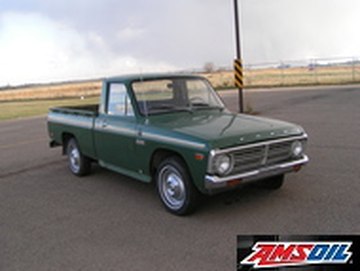
Catalog vehicle photograph for 1981 Ford Trucks COURIER
Vehicle photograph from our catalog. Appearance may differ by model or trim.

If you're looking for another year, make or model instead of this 1981 Ford Trucks COURIER motor oil, try one of these similar models below. We try to keep one page for each model vehicle.

Visit us on social media